
Platform governance, creator style
I'm Ben Whitelaw, the founder and editor of Everything in Moderation*. I'm standing in for Alice in this week's Trust & Safety Insider.
This week's newsletter is different in two ways: 1) it's written by me and b) it requires an EiM* membership to read. You might reasonably ask why.
EiM is funded through a combination of sponsorship and reader support. I'm hugely grateful to both; together, they mean I don’t have to plaster EiM* with ads and can instead spend valuable time on curation and analysis.
That said, current EiM* members don't get a whole lot of bang (aka benefits) for their buck. So today is a small experiment to see whether deeper-dive posts like this would be a valuable membership benefit while keeping the core Week in Review briefing open to all.
I'm not sure how often we'll run experiments like this. But if you’ve been meaning to support EiM, perhaps this is the nudge you needed. And if you're unable to afford access for whatever reason — maybe you're a student or between roles — drop me a line.
As ever, get in touch if you have any feedback about today's edition or just to say "bring Alice back!". And, in time-aged Hunsberger fashion, here we go! — Ben
Creator turned governance actor
In what ways are creators engaging in platform governance, and how are you seeing that change over time?
That was the question I posed to Dr Blake Hallinan, Professor of Platform Studies at Aarhus University and one of the leading researchers examining creator governance, when she joined me on last week’s Ctrl Alt Speech podcast.
Dr Hallinan has published a number of papers on the topic and shared the different ways that creators typically dabble in shaping platform rules:
“One strategy is horizontal, where creators are speaking to other creators, as peers, as colleagues, as people operating in the same space and creating norms about how they should or should not behave…. [The] main strategy is vertical, where you get creators trying to reach upward towards the platform and shape what its policies are, how it's enforcing things, what features it should make available. And that's usually done by speaking out, by using the influence that they have — whether for advertisements or for building community.”
Now, if you’ve been following any of Dylan Page’s channels in recent weeks, both of these approaches will be familiar.
The TikToker, who goes by Newsdaddy, is an established news creator with more than 18 million followers on TikTok, where he produces slick, approachable content about whatever stories take his fancy.
In recent weeks, he has posted about TikTok’s black-box moderation policies after five videos he made about the capture of Nicolás Maduro were demonetised or taken down, and his ability to appeal was removed.
In my mind, Page is a power creator because of his audience size but also because he is deeply embedded within a single platform. As part of TikTok’s Creator Rewards Program, he makes the majority of his revenue from posting videos that meet the platform’s requirements. But it also means that he gets invited to ByteDance’s HQ and travels business class on state-of-the-art Chinese trains.
In a long YouTube video explaining his investigation, he did two things:
- He spoke to fellow creators about the issues they’ve faced — what Dr Hallinan would call the “horizontal approach”.
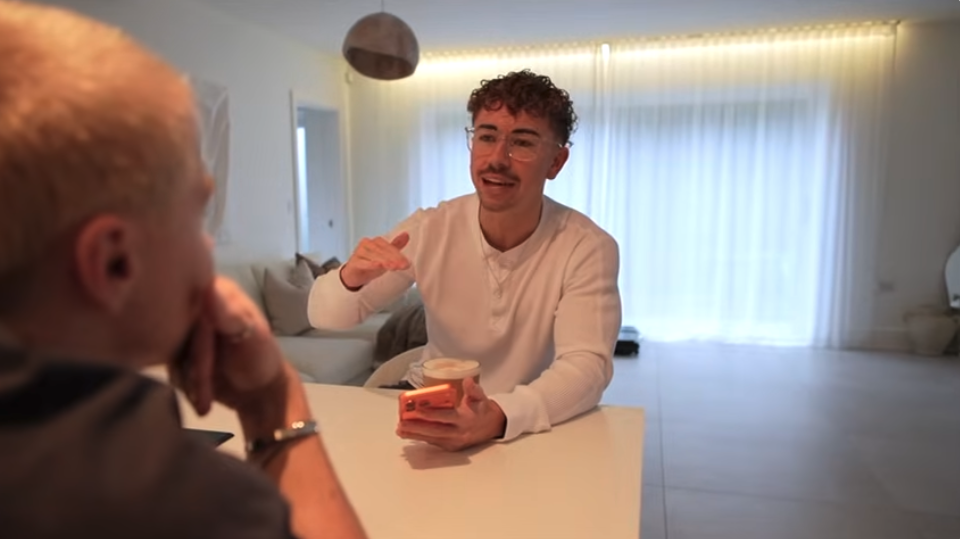
- He also explained his contact with TikTok, including visiting ByteDance’s headquarters — a clear example of the “vertical approach”.

Arguably, by producing a video about TikTok’s moderation, Page is using his influence to try to rally his audience to understand and react — very much the “vertical approach”. And they did: his YouTube video has received more than 750,000 views to date.
To my knowledge, there has been no formal update from the platform and no change to the policies he highlighted. But he does have a partner manager — a role designed to work with creators to accelerate growth and scale on the platform — and I know the kind of internal panic his videos would have caused. When I worked in newsrooms, my employer had a similar point of contact at Facebook and Twitter, and they were quick to work with us whenever there was reputational risk.
So the question becomes: how powerful could creators be in changing platform policies?
A (still) working hierarchy of influence
Page’s mini-campaign clearly is far from the the first time influential users have challenged platform policies.
The most memorable example in recent memory was the decision by dozens of prominent Substack writers to leave the platform following its laissez-faire approach to moderating Nazi content (EiM #230). Others stayed but turned off monetisation to prevent Substack from profiting.
After that episode, I tried to conceptualise where creators — particularly those who make money from a platform — sit within the hierarchy of influence.