
The split-screen reaction to the UK social media ban
I'm Ben Whitelaw, the founder and editor of Everything in Moderation*. I'm standing in for Alice in this week's Trust & Safety Insider.
I had a topic all lined up for yesterday's newsletter. Unlike some weeks, it was written and ready to go. And then the news about the UK's under-16 social media ban broke.
The reaction to it — particularly the split between parents and internet policy experts — left me feeling bewildered. And so I've tried to capture what felt odd about it and why it's not dissimilar to the other great divisive policy moment of my lifetime (Happy 2016 referendum, by the way).
Hit reply or head to the comments on the EiM website to share your take - where do you sit on the ban? What unintended consequences will this have? And, dare I say, what can we learn from the parenting campaigners who made this happen? As Alice often says, here we go! — Ben

With global regulators clamping down on easily bypassed age gates, "paper compliance" is no longer enough.
On June 18th, Resolver is hosting a cross-border panel session to define the operational reality of age verification. Senior policy and investigation leaders from Ofcom, Coimisiún na Meán, the ICO, and Internet Matters will align on how regulators actively audit safety implementations.
Resolver will also share exclusive data from technical red-teaming of age verification solutions currently in the market. If you are a GC or Trust & Safety leader finalising your deployment strategy, secure your spot today.
Two sides of the same debate
Yesterday morning — as many EiM readers will be aware by now — UK prime minister Sir Keir Starmer announced a social media ban for children under 16.
Having followed the debate since the Online Harms White Paper (EiM #21), through the rocky passage of the Online Safety Act (EiM #286) and into the parent-led backlash, the timing was not a shock. Media briefings have made clear that ministers have been moving in this direction for months and Starmer’s recent performance in other parts of his premiership has necessitated action.
And yet I still felt genuinely disoriented by the response to the news.
On LinkedIn, the announcement was met with caveats and with big “what now?” questions. The Molly Rose Foundation reiterated that the ban did not “remove the risks children face online” while other children’s rights groups asked whether the consultation had been properly weighed and urged the UK government to get wider input from children and independent experts. Academics pointed to a thin evidence base and said the ban didn’t “solve our collective concerns about the increasingly digital childhoods experienced in the UK today”.
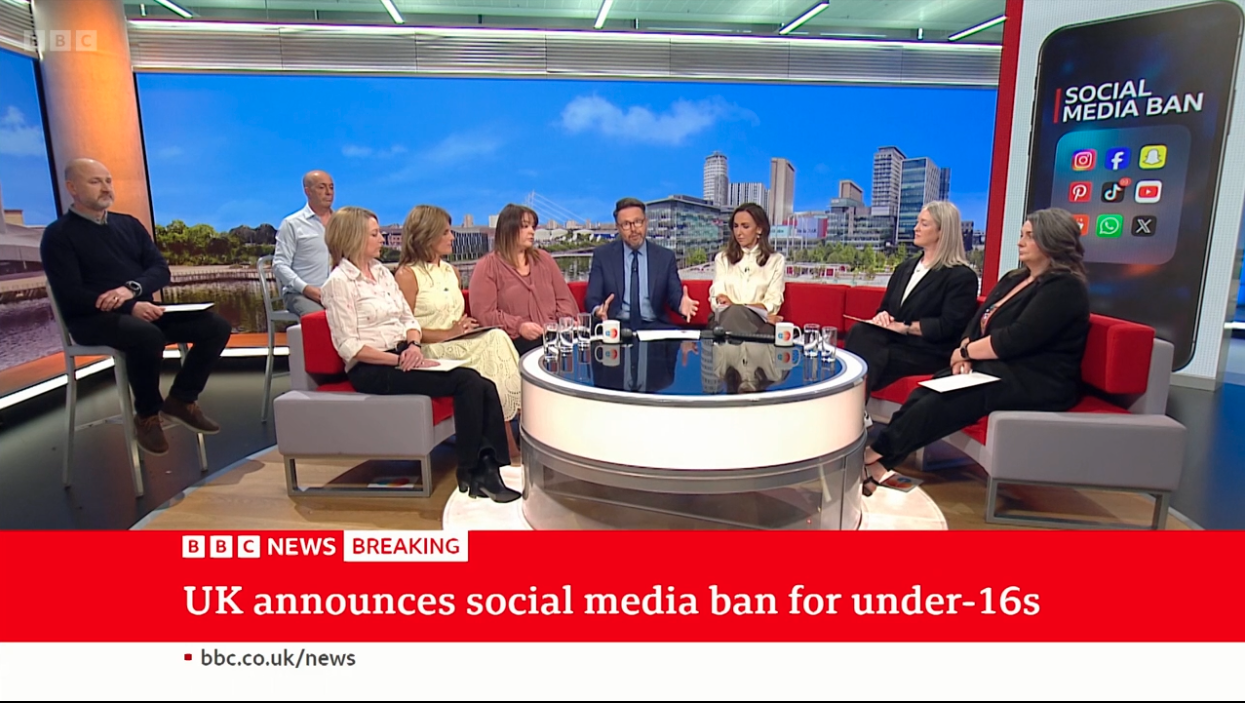
The tone was very different elsewhere. On national TV, parents of children who had died after harmful social media experiences sat in the studio reflecting on years of campaigning, grief and being ignored. It was an emotional and difficult watch.
In the WhatsApp groups of the Smartphone Free Childhood, the campaign group that coordinated many of the 116,000 responses to the UK’s recent social media consultation, it was pure celebration:
“This is phenomenal news for our children and future generations. It’s still sinking in. But one thing is clear: this simply wouldn’t have happened without the hundreds of thousands of parents who spoke up, got organised, supported one another and refused to accept that the status quo was the best we could offer our children. In short: it wouldn’t have happened without this community.”
I found the next 12 hours wholly disorienting. Not because people disagreed — that was to be expected — but because there seemed to be so little shared understanding of what problem had been addressed.