
T&S is political. Fund it like it is.
I'm Alice Hunsberger. Trust & Safety Insider is my weekly rundown on the topics, industry trends, and workplace strategies that trust and safety professionals need to know about to do their job.
Become an EiM paid member today to support independent coverage of the T&S industry and get access to the full archive of editions — including some of my greatest hits.
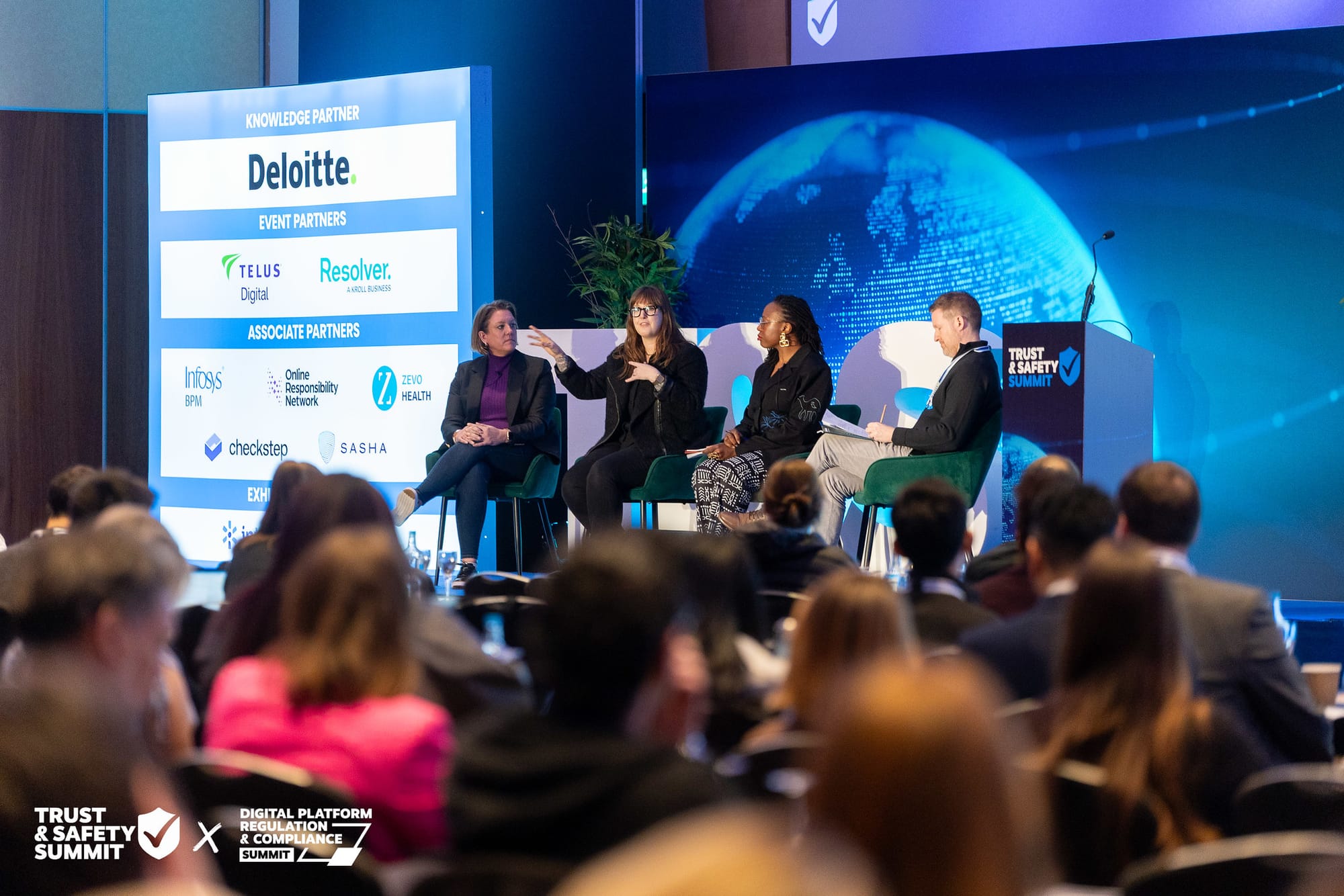
This week, I talk about the themes I saw at the Trust & Safety Summit in London last week. The event was closed to media but Ben and I were lucky enough to take part as long as we abided by the Chatham House Rule. As such, I won't be getting into specifics of any talks, but I did observe a few common threads across the event, and of course I have plenty of thoughts of my own. (You can read last year's Summit reflections here, for comparison.)
Before we get into that, I'd like to quickly recommend a fun sci-fi novella with a surprise Trust & Safety plotline: Automatic Noodle.
Get in touch if you have any questions about today's edition or want to debate the potential for food bots to build their own ghost kitchen. Here we go! — Alice
"EiM consistently shares content that I don't find elsewhere" - T&S gaming expert
T&S leaders of all types say the same thing, every week: Everything in Moderation* gives them an overview to the industry that is hard to match, delivered by people who actually know how difficult it is.
If you’re a technology company, law firm or nonprofit looking to put your work in front of the people shaping Trust & Safety, sponsor EiM today.
Three uncomfortable truths about Trust & Safety
I don't need to tell you, T&S Insider readers, that Trust & Safety work is inherently values-based. But I left last week's Trust & Safety Summit being reminded of that age old truth. Let me explain why.
T&S teams decide what kinds of speech and behaviour get prioritised and what gets minimised. They shape what conversations happen in a community and what the overall tone of a space feels like. They make choices about how marginalised communities are protected and how misinformation is treated.
There is no true neutrality when you're curating speech and behaviour, let alone when you're doing it at the scale of large platforms. In fact, claiming neutrality is itself a political stance, as was highlighted during my panel (see below). The reality, as we all know, is that teams of safety professionals are making some of the most consequential decisions a company faces about how it presents itself to the world.
When you think of it like that, it's fairly easy to think that T&S teams should resourced and positioned accordingly. And in fairness, several presenters at the Summit explained how their companies were doing exactly this: integrating trust and safety into business strategy, not just treating it as a cost centre, doubling-down on product safety nudges and investing in effective AI-assisted content moderation. It was genuinely encouraging to see T&S being taken seriously as a driver of the business.
But it is only half the story.